





Work at height rescue plan

Contents |
[edit] Introduction
The Work at Height Regulations (2005) define work at height as:
- work in any place, including a place at or below ground level;
- obtaining access to or egress from such place while at work, except by a staircase in a permanent workplace;
where, if measures required by the regulations were not taken, a person could fall a distance liable to cause personal injury.
The regulations impose duties on:
[edit] Rescue plan overview
Where work at height is necessary (typically when fall arrest systems are in use), duty holders are required by law to ensure that work at height is properly planned and organised. This means duty holders are obliged to have a rescue plan in place, which ensures that a worker can be retrieved as soon as possible if a fall occurs.
A rescue plan is a pre-planned procedure designed to safely retrieve someone who has fallen from height and is in a potentially dangerous position. The plan provides information about the type and location of rescue equipment that is vital in the rescue process.
The Health and Safety Executive suggests duty holders make several considerations in their plans, including:
- What will be the anchor point for the safety equipment?
- What type of weather could compromise worker safety?
- Will the rescuers be safe when carrying out the procedure?
- Is the equipment the individual was using no longer safe?
- How will the individual be attached to the rescue kit once they are reached?
- How will they be moved once the rescue team reaches them?
[edit] Competent rescuers
During work at height rescue situations, emergency rescue arrangements should not rely on the fire brigade or emergency services. Waiting for emergency services may be critical, and it is not their duty to rescue a fallen worker.
The Work at Height Regulations 2005 state that all activities, including the rescue, are the responsibility of the employer and should be carried out promptly by competent people within the organisation who fully understand the plan. Potential rescuers should be screened for sufficient skills and experience to perform rescue operations.
Rescue typically involves the recovery of a casualty by another person either remotely or directly. This differs from an evacuation, which is typically carried out by a stranded user to escape from a remote situation such as a tower crane.
Carrying out rescues and the use of rescue equipment requires technical capability in addition to the ability to use personal fall protection. There are also specialised rescue kits designed for extreme cases in which a rescuer needs to be lowered head-first into a confined space to perform a rescue. Regular training may be required for the designated rescuer to maintain competence in these types of systems.
[edit] Related articles on Designing Buildings
- Competent person.
- CONIAC produces essential messages on safe work at height.
- Fall prevention systems.
- Health and Safety.
- Injuries on construction sites.
- Work at height.
- Work at height checklist for managers.
- Work at height regulations.
- Working at height - our duty to prevent harm and protect each other.
- Working at height training.
[edit] External resources
Featured articles
Check out some of the best features and news from Designing Buildings as well as key stories from around the web.

New Prime Minister delivers on ECA call for cut in electricity costs.

CIOB reacts to the announcement of Andy Burnham as Prime Minister.

Heritage and conservation science workforce survey - Have your say.

England's Suburbs 1820-2020. Book review.

New, more proportionate and targeted approach for higher-risk building assessments.
Government brings British Steel into public ownership.

UKCW Birmingham returns with bold new theme and focus.
New guidance published on competence requirements for self-certification schemes.
Construction Management, 8 July
NEETs crisis drives interest in trades, but apprenticeships barriers remain.
Passive fire protection webinar

MEP services penetration seals.

Where its at podcast (and video) - The role of the Architectural Technologist as an Expert Witness.
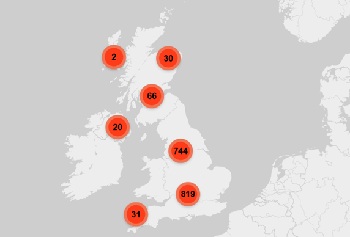
More than 200 remarkable buildings added to SAVE’s Buildings at Risk register.